About PanCAD.ai

Making early detection reachable.

We are PanCAD.ai, a Taiwan-based company built on NTU research and focused on supporting earlier pancreatic cancer detection.

Our Mission

Every CT scan benefits from an additional review

Pancreatic cancer can be difficult to detect early, and late diagnosis remains a major challenge. AI-assisted review may help radiologists identify suspicious findings while lesions are small; clinical decisions remain with the care team.

Patient first

Every product decision starts with a patient-centered question: “Does it help patients?”

Evidence first

We support claims with published literature and applicable regulatory documentation. Clear, accurate data respects medical partners.

Working alongside physicians

AI does not replace physicians; it provides additional information for radiology and gastroenterology teams.

Milestones

From fundamental research to clinical care

2016

Prof. Wei-Chung Wang (NTU) and Prof. Wei-Chih Liao (NTUH) launch AI research for early pancreatic cancer imaging

2019

NTU research team begins multicenter clinical validation

2022.11

PanCAD.ai Co., Ltd. founded; technology licensed for commercialization

2023

Taiwan’s first RSNA Margulis Award; SNQ, Taipei BioTech, and National Innovation Awards

2023

FDA Breakthrough Device Designation; TFDA medical device license No. 007946

2026

Used across medical centers, regional hospitals, and health centers, with cumulative use in more than 5,500 patient cases across research and commercial applications
Technology Origin

A decade of research behind AI-assisted pancreatic imaging

PANCREASaver® grew from long-term research at NTU and NTU Hospital — an AI-assisted medical device focused on earlier pancreatic cancer detection.

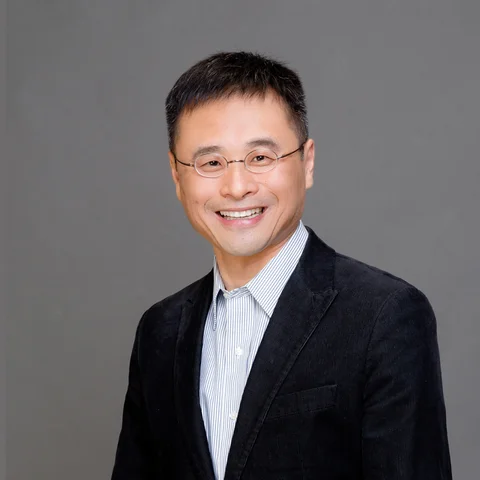
Prof. Wei-Chung Wang, NTU

Technical founder and principal investigator for AI-assisted pancreatic lesion detection

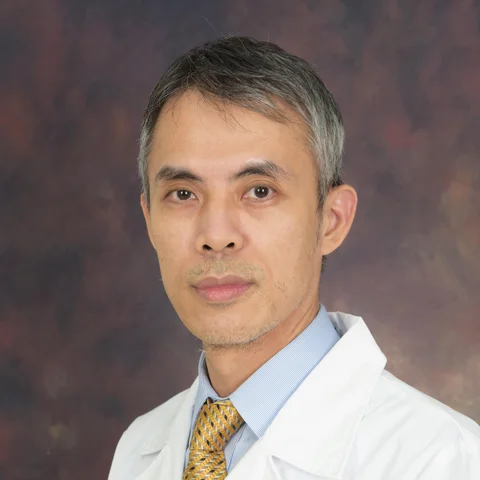
Prof. Wei-Chih Liao, NTUH

Clinical validation lead — prospective, multicenter studies in real-world settings

PanCAD.ai

Commercialization — translating research into clinical software

Co-founders

Research and clinical practice meet — supporting review of pancreatic findings under 2 cm.

Prof. Wei-Chung Wang

Prof. Wei-Chung Wang

  • Professor, Institute of Applied Mathematical Sciences, National Taiwan University
  • Founder and Director, MeDA Lab
  • Co-founder, PanCAD.ai
  • Education: Ph.D. in Applied Mathematics, University of Maryland (1996).
  • Research: medical AI, medical imaging and data analysis, matrix computation, and high-performance scientific computing; 100+ international publications ↗.
  • Roles: Professor, Institute of Applied Mathematical Sciences, National Taiwan University; Founder and Director, MeDA Lab; Co-founder, PanCAD.ai.

🔬 Smart Healthcare & Technical Innovation

  • Regulatory milestones: led the team that developed PANCREASaver, which received FDA Breakthrough Device Designation in 2022 and a Taiwan TFDA medical device license in 2023.
  • Published study result: 92.1% sensitivity for tumors under 2 cm in the defined study population; see the original paper for methods and limitations.
  • Cross-domain development: co-founded PanCAD.ai to translate laboratory research into clinically practical medical software.

🏆 Major Awards & Honors

  • 2025 | NSTC Outstanding Research Award
  • 2025 | TWSIAM Fellow
  • 2023 | RSNA Alexander R. Margulis Award for Scientific Excellence
  • 2024 | SNQ Smart Healthcare Silver Award (PANCREASaver)
  • 2024 | Taipei BioTech Award – Cross-domain Excellence Gold (PANCREASaver)
  • 2021–2023 | National Innovation Award & Innovation Advancement Award (multiple wins)
  • 2021–2022 | NSTC Future Tech Award
  • 2023 | Y.Z. Hsu Science Paper Award – Artificial Intelligence
  • 2010–2011 | NTU University-wide Teaching Excellence Award

📚 Academic Impact & Key Positions

  • 100+ publications in top journals including Nature Medicine, The Lancet Digital Health, Radiology, and SIAM Journal on Matrix Analysis and Applications.
  • Former Convener of the NSTC Mathematics Division (2021–2023) and President of TWSIAM (2020–2022).
  • Currently a researcher at NTU Hospital Center for Smart Healthcare and a member of the Taiwan Radiological Society AI & Imaging Informatics Committee — bridging mathematics, informatics, and clinical medicine.
Prof. Wei-Chih Liao

Prof. Wei-Chih Liao

  • Attending Physician, Department of Internal Medicine, NTU Hospital (2005–)
  • Professor, Department of Internal Medicine, National Taiwan University (2020–)
  • Director, Integrated Diagnostics and Therapeutics, NTU Hospital (2024–)
  • Co-founder, PanCAD.ai
  • Appointments: Attending Physician, Department of Internal Medicine, NTU Hospital (2005–); Professor, Department of Internal Medicine, NTU (2020–); Director, Integrated Diagnostics and Therapeutics, NTU Hospital (2024–).
  • Education: M.D., Ph.D. in Epidemiology, and M.Sc. in Epidemiology, National Taiwan University.
  • Research interests: gastroenterology, epidemiology, pancreatitis and pancreatic cancer, and pancreaticobiliary endoscopy (ERCP).
  • Academic identifiers: ORCID 0000-0001-5362-6953 ↗ | Scopus Author ID 56452203300 ↗.

🎖️ Major Achievements & Contributions

  • Current appointments: Attending Physician, Department of Internal Medicine, NTU Hospital (2005–); Professor, Department of Internal Medicine, NTU (2020–); Director, Integrated Diagnostics and Therapeutics, NTU Hospital (2024–).
  • Education: M.D., Ph.D. in Epidemiology, and M.Sc. in Epidemiology, National Taiwan University.
  • ASGE Ambassador (2012)
  • NTUH Outstanding Research Award for Junior Faculty (2014)
  • WEO Emerging Star (2015)
  • GIE Outstanding Reviewer (2012–2014, 2016, 2018)
  • FASGE (2019)
  • NSTC Outstanding Research Award (2024)

🩺 Research & Clinical Expertise

  • Research interests: gastroenterology, epidemiology, pancreatitis, and pancreatic cancer.
  • Clinical expertise: pancreaticobiliary endoscopy (ERCP) and related gastrointestinal endoscopy care.
  • Academic identifiers: ORCID 0000-0001-5362-6953 | Scopus Author ID 56452203300.

Want to know more? Let's talk.

Partnership, media, or careers — all welcome.

Contact us